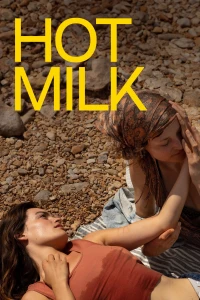
Rose pushed her wheelchair through the dunes of Almería’s shore, grit catching in its wheels—her daughter Sofia wrestling the chair forward as the Spanish sun hammered down. Rose had come hunting miracles from Dr. Gomez, a gaunt physician whose clinic smelled of bitter herbs simmering in copper pots, not antiseptic. Locals whispered he’d mended bones with poultices of crushed scorpions and sewn wounds with agave thread. For Rose, swollen and trembling in her chair after years of doctors shrugging, he was the last hinge between hope and surrender.
Almería clung to them—the salt, the relentless white light, the sticky glaze of heat on their skin. The town pulsed with a thrum Sofia couldn’t name: fishermen mending nets in cubist alleys, the café presses hissing, the restless Mediterranean exhaling against the shore. All while Rose winced, massaging her seizing thigh, murmuring about hot milk—how her mother had sworn by it for nerves, lukewarm with a coin of butter melting into gold. Sofia bit back a sigh. Her mother’s remedies tasted like captivity.
Sofia had spent years folding herself smaller—cancelled university acceptances, silent dinners monitoring Rose’s trembling hands, nights listening for the choked gasps signalling an attack. But here, sweat gluing her shirt to her spine, she felt something prising open inside her. At dusk, escaping the cramped rental where Rose boiled cumin seeds for tea, Sofia walked. Past ochre walls flaking like sunburned skin, past bars where flamenco guitar rattled glassware, past couples tangled in dim archways, breath mingling with cigarette smoke.
It was near a kiosk selling figs drizzled in honey that Ingrid found her. “You don’t blink,” the woman said, her French accent wrapping Sofia like smoke. Ingrid wore a dress the color of burnt orange, fraying at the hem, and smelled of rosemary and salt. Her fingers, stained blue from repairing fishing nets, brushed Sofia’s wrist. “Mothers are anchors, non? So heavy we forget what our own lungs are for.”
Ingrid led her to a bar where old men slapped dominoes on marble tables. They drank tinto de verano stained crimson by the ice melting in it, and Sofia spoke—about her father leaving before her tenth birthday, about Rose calling her at midnight needing aspirin and reassurance, about her own fists, perpetually clenched. Ingrid’s laugh was low, volcanic. “You’re still trying to be the ‘good girl’. So boring. This place—quiet, yes? But full of teeth.” She tilted Sofia’s chin toward the sea. “Don’t you want to feel them?”
Dr. Gomez examined Rose under the medical tent he’d pitched behind his terra cotta clinic—blowing pipe smoke over her spine, pressing finger bones to her pulse points. Sofia watched, restless. Her clothes felt too tight. “Ingrid doesn’t think you’re sick,” she blurted one dusk, regret souring her tongue as Rose snapped her head up. “She says—enervation can become a kind of religion.”
Rose’s knuckles whitened on her chair. “Your grandmother swore by hot milk for weakness. Real cures, not this witch doctor nonsense.” She swallowed a wince. “Though I’d kill for a proper cup here—this Spanish stuff tastes like water.”
Later, Sofia found Ingrid behind a tavern, ribs pressed against the sea wall, watching waves chew sandstone. “Come to Huelva with me tomorrow,” Ingrid said, not turning. “There’s a beach there—ash black, like a dirty pearl. Sunrise hits it… makes your blood ache.” She hooked a finger through Sofia’s belt loop. “Stop asking for permission to live."
Sofia didn’t sleep. At dawn, she left a note: Gone to the market for bread. The bus to Huelva stank of diesel and ripe peaches. Ingrid braided Sofia’s hair with sea grass as the desert gave way to cliffs. “Helps, don’t you think?” she murmured, lips grazing Sofia’s ear. “Not being the keeper of someone else’s ruins?”
Days yawned raw and sunlit. Rose demanded hot milk from cafés, scowling at its thinness, while Dr. Gomez brewed tonics that left her drowsy, murmuring about “spiritual inflammation.” Sofia drank vermouth with Ingrid on rooftops, learning how lightning forks over the sea, how to suck the salt from the rim of a glass, how desire could be a knife, peeling back layers she’d let calcify.
But decay, like sugar stirred into hot milk, always dissolved back into everything. One midnight, Rose collapsed trying to reach the bathroom—her leg a dead weight—and Sofia, lipstick smeared from kissing Ingrid in a bar’s unlit stairwell, found her panting on cold tiles. Dr. Gomez arrived smelling of anise, pressing ajenjo leaves to Rose’s temples. “Bodies cling to pain like a favorite song,” he told Sofia, eyes heavy with moonlight. "Still. The cure isn’t in these herbs, niña. It's in the hand that lets go."
Fog rolled in from the sea the morning Dr. Gomez declared the treatment complete. Rose gripped Sofia's forearm, trembling not from pain now, but rage. “He called me a liar. Said my blood was too loud for sickness. A—a charlatan.” Her voice cracked—not with illness, Sofia realized, but humiliation. “Pack. We’re done here.”
Ingrid found them at the bus terminal. She slid a fig into Sofia’s hand, sticky-sweet. “I told you—this town has teeth. Did you let them cut you?” Sofia’s throat tightened. Rose glared, silent. The bus exhaust screamed gray.
As the coast shrank behind them, Sofia split the fig open with her thumb. Blood-dark flesh, seedy and glistening. She bit. Sweet, until the grit between her teeth reminded her—of dunes, of salt, of hands blue from mending broken things. Her mother slept, head against the window, while Sofia pressed a finger to her own pulse, counting the beats she finally owned.