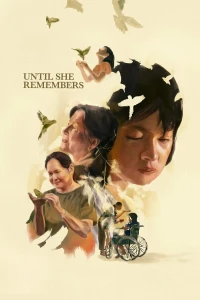
The silence at home wasn't peaceful; it was the thick, heavy quiet of things broken, the sharp edges of her parents' world grinding against each other in a way that split open the familiar foundation of her life. For Lien, a bright but perpetually overwhelmed high schooler drowning in exams and expectations, this sudden fracture wasn't just a crack in the wall—it felt like the floor giving way. So, she ran. Not dramatically, just... away. She sought refuge in the slow, sun-dappled world of her grandmother’s small house in a quiet coastal town, a place steeped in the scent of salt, old wood, and time itself.
Here, far from the frantic energy and unspoken tensions of her parents' escalating conflict, Lien found an unexpected anchor: her grandmother, whose hands spoke more stories than her voice, and Linh, an old childhood friend whose presence felt like slipping into a worn, comfortable jacket they’d both outgrown but never quite forgot. Linh didn’t press for explanations about the tear-streaked goodbye or the hastily packed bag. She simply was—a constant, quiet reminder of a time before the fractures, a bridge to an innocence Lien thought lost.
It’s in this liminal space—sandwiched between the chaos she fled and the gentle rhythm of her grandmother’s days—that Lien truly began to see life. Not from the frantic perspective of a teen scrambling for grades and parental approval, but from a slower, higher vantage point, one granted by distance and the loving, unobtrusive presence of her grandmother and Linh. She watched her grandmother tend a vegetable patch with the patience of a saint, saw the quiet dignity in her weathered hands mending a fishing net, felt the unspoken understanding in the way Linh listened, really listened, without judgment.
These moments weren't lessons etched on a blackboard or memorized from a textbook. They were subtle, profound truths absorbed through osmosis: the quiet strength found in routine, the unexpected depth in a simple shared meal, the healing power of being seen without needing to perform, the way memory becomes a comfort and a burden simultaneously. Her grandmother spoke little of the past, but her very being was a testament to endurance and grace. Linh, with her easy laughter and matter-of-fact wisdom about small-town life, mirrored a groundedness Lien desperately needed. Together, they offered a lesson in living, breathing, simply being amidst the noise, both tender and achingly selfless. The path to understanding the fracture she left behind wasn't linear; it was woven from threads of observation, shared silences, and the quiet hum of a life lived deliberately. She was learning not just to survive the rupture, but to navigate the complex geography of her own heart. And somewhere in that quiet process, beneath the layers of pain and confusion, the struggle to make sense of it all began to coalesce around a single, quiet realization: her own story, her own strength, wouldn't truly solidify until she could stop running from the past, until she could turn back and truly remember the core of who she was, both the broken pieces and the unyielding foundation beneath it all. It was a journey that felt like it wouldn't be complete until she could finally face the fractured memories head-on and integrate them, until she remembers not just what was lost, but what remained indestructible within her.